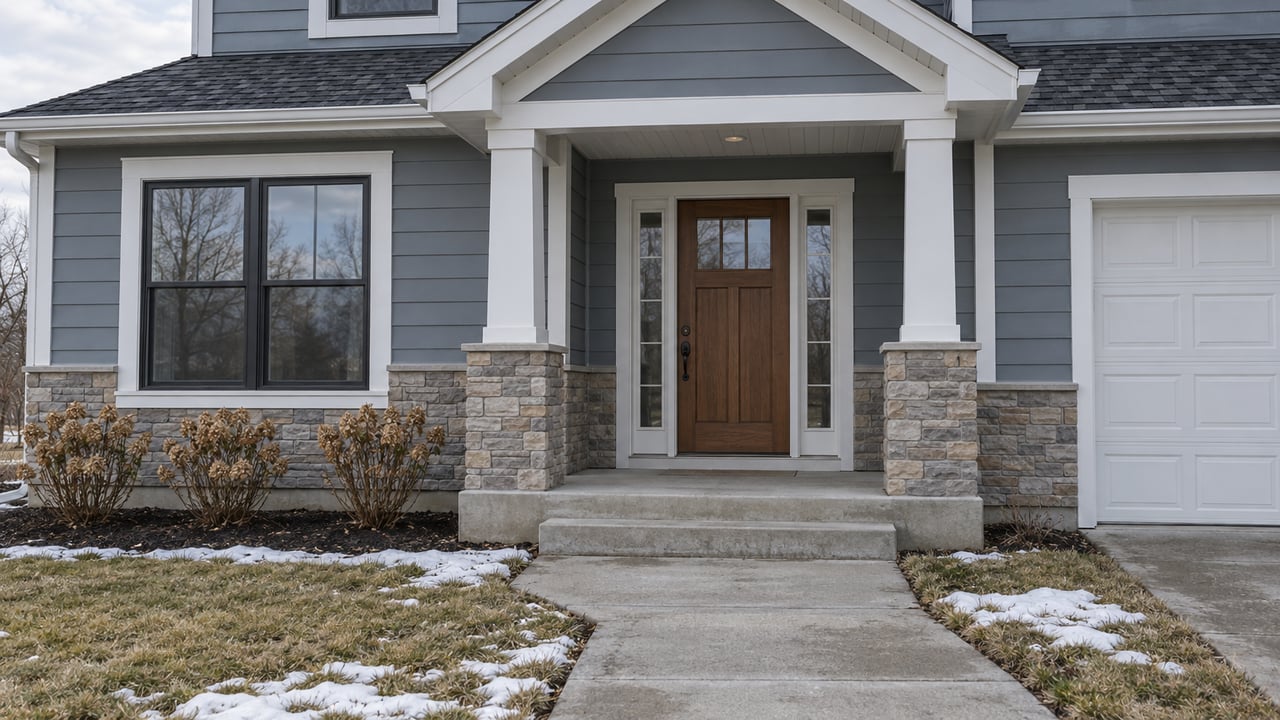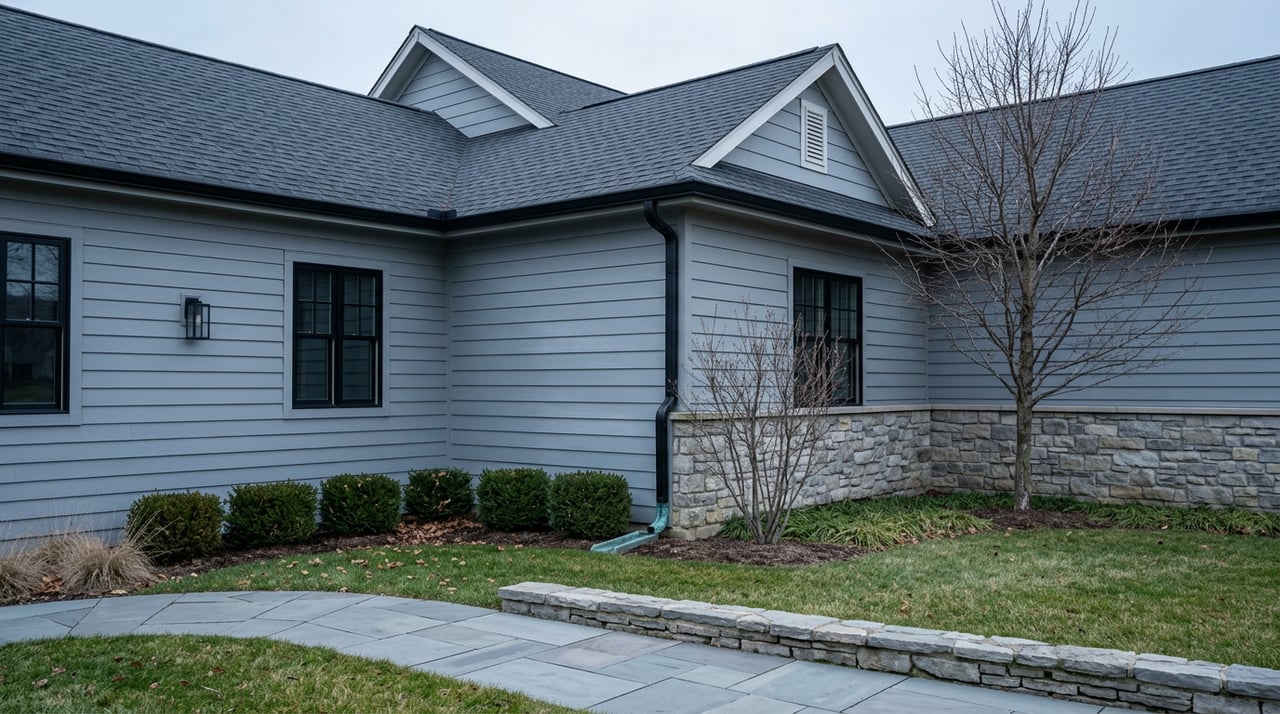
Two listings can carry the exact same address format, the same 46304 zip code, and the same asking price bracket, and still sit on opposite sides of a boundary that can coincide with different utility arrangements. That line is the Chesterton corporate limit, and almost nothing on a listing sheet tells you which side of it a house is on.
Look at two properties currently on the market as a case in point. One sits in Duneland Cove, a subdivision inside Chesterton's town limits where lots are marketed specifically because they come with municipal water, sewer, gas, and electric already run to the site. The other sits in a five-lot subdivision called Branham Meadows, platted in unincorporated Porter County under the "Chesterton, IN" mailing address, and sold explicitly without utilities in place. Buyers there install a private well and septic system themselves, with electric and gas brought in separately.
Same town name on the envelope. Two entirely different infrastructure realities underneath it.
Why "Chesterton" Doesn't Mean What You Think It Means
Indiana's local government structure explains the gap. Every acre in the state sits inside a township, and townships existed before most towns did. When a town incorporates, it carves a boundary out of the township it sits inside, but the postal service keeps using the town name for addresses well beyond that boundary because that's the nearest post office, not because the property is inside town government. A rural parcel ten minutes from downtown Chesterton can still say "Chesterton, IN" on the mailbox while legally belonging to the surrounding township government instead of the town.
You can actually see this show up in the public record. Porter County tax records list Chesterton parcels under taxing unit names like "Chesterton-Westchester Twp," a designation that only exists because the town and the township both have a claim on that specific parcel. Properties outside the corporate limit don't carry the town name in their taxing unit at all. If you want a fast, checkable way to tell which side of the line a listing sits on before you ever schedule a tour, that taxing unit label is it.
What the Line Actually Changes
The practical differences aren't cosmetic. Chesterton operates its own wastewater utility, billing in-town customers directly for sewer service tied to the town's treatment plant. Step outside the corporate limit and the utility arrangement changes. Instead, a private well and septic system are part of the setup, and Porter County's Health Department Environmental Division controls the permitting for both. Before you can even install a septic system on an unincorporated lot, the county requires a soil test on file, a septic and well field investigation report, and a formal Well and Septic Permit Application processed through that office.
Here's how the two situations compare in practice:
| In-town (e.g. Duneland Cove) | Unincorporated (e.g. Branham Meadows) | |
|---|---|---|
| Water source | Municipal system | Private well, permitted by county |
| Sewer | Town wastewater utility | Private septic, permitted by county |
| Who bills you | Town of Chesterton | No monthly utility bill for water/sewer |
| Who permits new systems | Not applicable, already connected | Porter County Health Dept. Environmental Division |
| Taxing unit label | Includes town name (e.g. Chesterton-Westchester Twp) | Township name only |
Neither column is objectively better. A well and septic system means no monthly water bill and no dependence on a municipal plant, which some buyers actively want. But it also means the system's condition becomes part of your due diligence in a way it simply isn't for a connected property
The Stormwater Twist That Catches People Off Guard
Here's the part that surprises buyers who assume unincorporated automatically means fewer fees. Porter County's own guidance states plainly that residents of incorporated areas do not pay the county storm water fee, but that Valparaiso, Portage, and Chesterton each charge their own. In other words, moving inside the town line doesn't make stormwater management free. It just changes which government sends the bill. A buyer comparing a $420,000 house in Duneland Cove against a similarly priced acreage parcel near Branham Meadows should factor in a town stormwater charge on one side and, on the other, the fact that unincorporated Porter County runs its own Clean Water Act compliance program.
This is the detail that actually reframes the decision. The sticker price on either lot tells you almost nothing about which ongoing costs you're inheriting. The corporate line does.
How to Find the Line Before You Write an Offer
A few concrete steps take the guesswork out of this before you're deep into a contract:
- Ask the listing agent directly whether the parcel sits inside Chesterton's corporate limits or in the surrounding township, and get it in writing.
- Check the property's tax unit designation, which will name the town if the parcel is inside it, or just the township if it isn't.
- If the property is unincorporated, ask whether the well and septic system already has a permit on file with the Porter County Health Department, since new installations require a soil test and a formal investigation report before a permit is issued.
- Confirm with the Town of Chesterton's utility office whether water and sewer service is actually run to the lot line, not just available somewhere nearby, since "available" and "connected" are not the same thing in new subdivisions still building out phases.
- Ask your lender early whether the property's water source affects underwriting, since well and septic properties sometimes carry additional inspection or testing requirements before closing.
None of this changes whether a given house is right for you. It changes whether you're pricing the full cost of owning it correctly before you sign anything.
Frequently Asked Questions
How can I tell if a Chesterton listing is on well and septic without asking the agent? The taxing unit name on the property's tax record can help identify which side of the corporate limit a parcel is on, but it cannot confirm whether it is on well and septic. If it includes the town name paired with a township, like Chesterton-Westchester Twp, that indicates the parcel is inside the corporate limit, but it does not confirm whether the property is connected to town utilities. If the taxing unit lists only the township, that indicates the property is unincorporated, but does not by itself confirm whether it uses a private well and septic system.
Does living outside Chesterton's town limits mean lower property taxes? Not automatically, and it isn't the right question to ask on its own. Tax rates are set by the combination of taxing units that apply to a specific parcel, which can include the county, township, school corporation, and library district regardless of whether the town itself is one of them. The presence or absence of the town in the mix is one factor among several, not a shortcut to a lower bill.
Is a private well and septic system a problem for getting a mortgage? It isn't automatically disqualifying, but it does add steps. Lenders commonly want assurance that the well produces safe, adequate water and that the septic system is functioning properly before closing, which typically means budgeting time and cost for water quality testing and a septic inspection as part of your contingency period rather than assuming it moves at the same pace as a connected property.
Comparing two listings that both say "Chesterton, IN" without knowing which side of the town line they're on is like comparing two job offers without checking whether the salary includes benefits. The number on the page isn't the whole picture. If you're weighing a lot in town against acreage just outside it, Matt Evans can walk you through exactly what each parcel's utility setup, tax unit, and permitting history actually mean for your budget before you make an offer. Get your free home valuation and start the comparison with real numbers instead of assumptions.
This article is general information, not legal, tax or financial advice. Consult a qualified professional about your situation.